
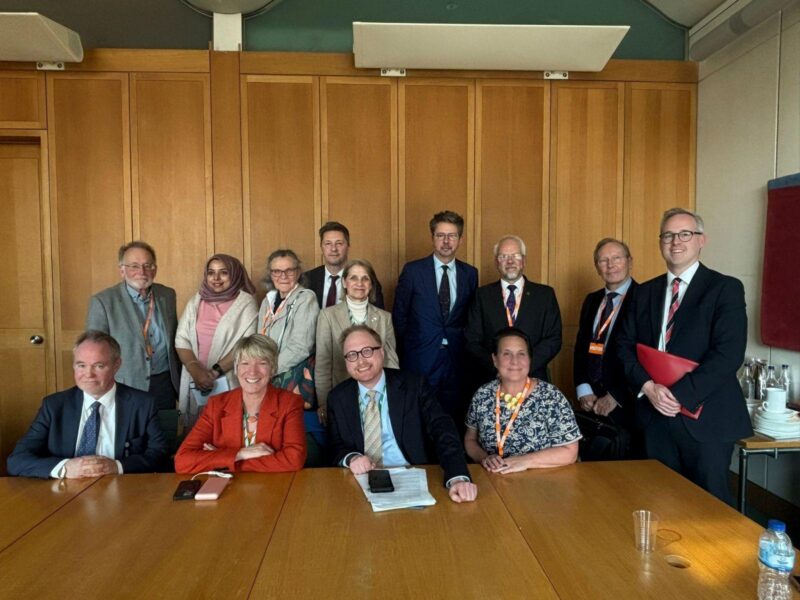
One of my aims when re-establishing the All-Party Parliamentary Group (APPG) for Unesco World Heritage Sites was to start a conversation about a National Strategy for heritage sites.
There have been calls, led by World Heritage UK, for the UK to adopt a National Strategy since at least 2019. While the UK still doesn’t have one, Ireland has adopted one with success.
That’s why in the most recent meeting of the APPG we discussed how a National Strategy would help resolve challenges that our heritage sites face, would allow for a joined-up approach to dealing with the challenges, and how this would open up opportunities to get more out of heritage sites.
Due to underfunding, reliance on volunteers, and the threat of climate change, World Heritage Sites face huge challenges. A National Strategy would provide direction to the government on how to combat these issues, especially by promoting collaboration across our heritage sites.
Most World Heritage Sites are central to their communities – with local history and identity intertwined with them. Unfortunately, many heritage sites – including world heritage sites – are at risk due to neglect, a lack of funding, and the complex planning laws that delay attempts to preserve them.
There is an opportunity for a World Heritage National Strategy to sit alongside the Labour’s Pride in Place scheme, which invests in overlooked and underfunded communities. Where the Pride in Place funding is up to communities’ discretion – potentially funding high street rejuvenation, cleaner neighbourhoods, or improved cultural and green spaces – a National Strategy would target bringing back heritage sites into public use.
World Heritage Sites are central to the UK’s international reputation and our residents’ understanding of who we are. The APPG for Unesco World Heritage Sites will continue to promote the great potential of a National Strategy.